What's New
Multi device dashboard: all your wearables in one view, no duplicates
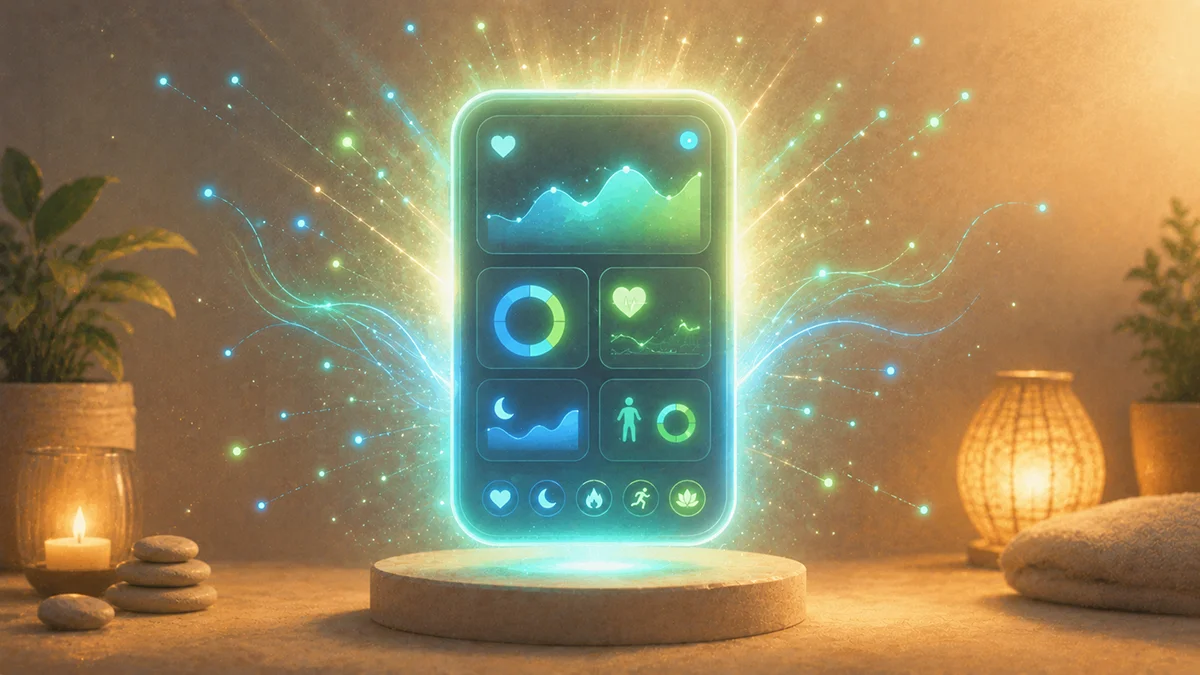
With today's update, FitMesh Sync introduces the global dashboard: a single screen that aggregates data from watches, ring and other sources, eliminating duplicates and always showing the best value for each metric.
TL;DR
- A single dashboard collects data from all your devices: smartwatches, ring, and any other connected source.
- FitMesh Sync eliminates duplicates automatically: steps are counted only once even if you wear multiple devices.
- For each metric the best value is kept, not the sum of all.
- The global view is available immediately for all beta users.
Many of you use more than one device. Some wear the smartwatch during the day and the ring at night. Some changed watch mid-year and want to see continuous data. Some use different devices depending on the activity. Until now FitMesh Sync showed data separated by source: useful, but not enough. From today there is the global dashboard.
One view, all sources
The new global dashboard collects in one place the data from all devices you have connected to FitMesh Sync: smartwatches, Colmi ring, and any other active source. You do not need to switch between tabs to compare numbers: you see them all together, organized by date and metric type.
How we handle duplicates
The duplicate problem is real: if two devices both record your steps in the same hour, adding them up would give a wrong number. The system we built solves this in three steps:
- Looks at the whole day, not single hours. When several sources cover the same day, FitMesh Sync compares the data for the entire day, not hour by hour.
- Chooses the most consistent source, not the highest number. It does not add up the values from different sources and does not simply take the highest one: it uses the source with the best hourly coverage and the most consistent data for that day.
- If it cannot decide reliably, it says so. When two sources give very different numbers for the same day and no criterion allows a reliable choice, that day stays marked as uncertain instead of letting a random number win.
What changes for single-device users
If you use a single wearable, the global dashboard simply shows you your data with a cleaner and more consistent view than before. Nothing changes in the collection logic, but the presentation is clearer: the main metrics are highlighted, weekly and monthly trends are more readable.
Practical examples of how it works
- Smartwatch by day, ring by night. Steps during the day come from the smartwatch. Sleep comes from the Colmi ring. The dashboard shows both without one overwriting the other.
- Two smartwatches at the same time. If you wear both on the same day, FitMesh Sync does not add up the steps from the two devices and does not simply pick the highest number: for that day it uses the source with the best hourly coverage and the most consistent data. In the rare cases where no source is clearly more reliable, the day stays marked as uncertain.
- Watch change mid-year. Data from the first watch for previous months and the new watch for subsequent months appear as a continuous line in the historical view.
How to access the global dashboard
Update FitMesh Sync to the latest version. The global dashboard appears automatically on the main screen if you have more than one device connected. If you have a single device, you find it under 'Global view' in the main menu. No configuration needed: the devices you have already connected are unified automatically.
Frequently asked questions
If I change the priority order between devices, does historical data change?+
Yes, the dashboard is recalculated based on updated preferences. The original data from each device remains intact: only which value is shown changes when there are overlaps. You can change priorities at any time from device settings.
Can I also see individual source data, not just the unified view?+
Yes. In the global dashboard you find a selector that lets you switch from the unified view to the per-source view. This way you can compare device-by-device data and understand any differences between one watch and another.
Does the dashboard work even if I use Health Connect on Android or Apple Health on iPhone?+
Yes. FitMesh Sync reads from Health Connect (Android) and Apple Health (iPhone) as additional sources, and includes them in the deduplication logic. Even data coming from those platforms is compared with data from direct devices and unified in the global view.
Medical disclaimer
The information in this article is for informational purposes only and does not replace advice from your physician, pharmacist or healthcare professional. FitMesh Sync is a fitness/wellness app, not a medical device, and does not diagnose or treat any conditions. For symptoms, clinical questions or treatment decisions always consult your primary care physician.
Written by
Matteo Pizzi
Founder & Solo Dev, FitMesh Sync · Fosforonero
Italian software developer. I built FitMesh Sync to fill the gap between my smartwatch and a real personal dashboard. Privacy-first, indie.
More about the projectKeep reading
Guide
Health Connect Duplicate Steps and Workouts: 7 Fixes
The quick solution: identify which apps write the same data, assign the correct priority for Activities and Sleep, break any synchronization loops, and only then delete the incorrect copies. Steps and workouts are not handled in the same way: this guide shows exactly where to intervene.
Guide
Colmi R02: the €25 smart ring that finally syncs all your health data
The Colmi R02 measures steps, heart rate, SpO2, HRV, stress and battery. The catch: data is locked inside the manufacturer's companion app. FitMesh Sync connects directly over Bluetooth and merges everything into your dashboard, no companion app required.
Guide
The Steps Total Doesn't Match the Hourly Chart? Here's Why
A daily total and an hour-by-hour chart that sometimes isn't there: it's not a bug, it's how FitMesh handles multiple sources of the same data without making up numbers.