Analysis
Galaxy Watch Ultra2 & Watch9: Health Connect Data
On July 22, 2026, Samsung unveiled Galaxy Watch Ultra2 and Galaxy Watch9. A metric measured by the watch isn't automatically a metric FitMesh receives: Samsung Health calculates proprietary scores that stay inside its own app, while only raw data reaches FitMesh, through two distinct paths (the direct Samsung Health Data SDK channel and Health Connect). Not every Samsung insight is exportable.
TL;DR
- Samsung unveiled Galaxy Watch Ultra2 (47 mm, from €749) and Galaxy Watch9 (40/44 mm, from €409 to €489) on July 22, 2026: pre-order the same day, general availability from August 7.
- The health features announced for this launch (refined Sleep Apnea, Vitals, Heart Health Score, Daily Cardio Load, Fitness Index, Hearing) are largely proprietary Samsung Health scores, not raw data exportable 1:1.
- FitMesh receives Galaxy Watch data through two parallel, distinct paths: the direct Samsung Health Data SDK channel and Health Connect, with different priority depending on the metric.
- FitMesh doesn't read or replicate any proprietary Samsung score (Heart Health Score, Daily Cardio Load, Fitness Index, Hearing): only the raw metrics actually exposed by one of the two paths.
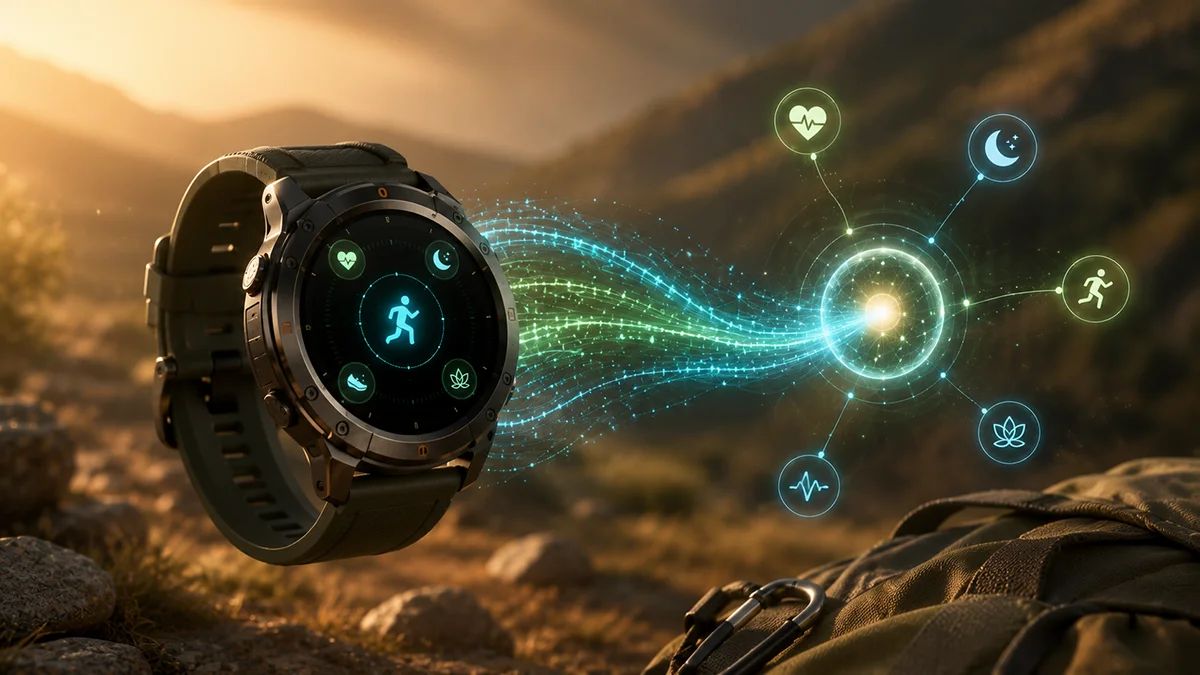
- Galaxy Watch Ultra2 and Galaxy Watch9 measure data and send it to Samsung Health.
- From Samsung Health, the Samsung Health Data SDK offers a direct, read-only channel to FitMesh, independent of Health Connect.
- Still from Samsung Health, data written to Health Connect reaches both FitMesh (a generic path, also used for other sources) and the Google Health app, via two separate links.
- The Google Health API is a different system: a cloud infrastructure evolved from the Fitbit Web API, which doesn't automatically receive Galaxy Watch data and doesn't replace Health Connect.
What Samsung Announced
Samsung unveiled Galaxy Watch Ultra2 and Galaxy Watch9 on July 22, 2026, during Galaxy Unpacked, positioned as the new generation's "health companion on the wrist." According to Samsung, TM Roh (CEO, President and Head of the Device eXperience Division) said the two models "represent a massive leap forward in Samsung's health vision," continuously tracking vital signs from the wrist. Ultra2 focuses on extreme sports performance (Trail Run, diving to 100 meters with EN13319 certification), Watch9 on everyday comfort and battery life (Samsung states +20% capacity over the previous model for the 40 mm variant).
Official Specifications
| Feature | Galaxy Watch Ultra2 | Galaxy Watch9 | Source |
|---|---|---|---|
| Dimensions & weight | 47 mm: 47.4 x 47.1 x 10.7 mm, 61.5 g | 40 mm: 42.7 x 40.4 x 8.6 mm (31.5 g); 44 mm: 46.0 x 43.7 x 8.6 mm (34.0 g) | Samsung Newsroom |
| Display | 1.52" (498x498), Super AMOLED, up to 5,000 nits | 40 mm: 1.34" (438x438); 44 mm: 1.47" (480x480); up to 3,000 nits | Samsung Newsroom |
| Processor | Qualcomm SDW6100 (penta-core, 3 nm), Snapdragon Wear Elite platform (Samsung confirms adoption for this model) | Same: Qualcomm SDW6100, Snapdragon Wear Elite (Samsung confirms) | Samsung Newsroom |
| Memory | 2 GB + 64 GB | 2 GB + 32 GB | Samsung Newsroom |
| Battery | 800 mAh (+35% vs. the previous Ultra, per Samsung) | 44 mm: 445 mAh; 40 mm: 390 mAh (+20% vs. the previous model, per Samsung) | Samsung Newsroom |
| Operating system | Wear OS 7, One UI 9 Watch | Wear OS 7, One UI 9 Watch | Samsung Newsroom |
| Connectivity | LTE, Bluetooth 6.0, Wi-Fi 2.4+5 GHz, NFC, dual-frequency L1+L5 GPS | Same; Bluetooth-only variant without LTE for both sizes | Samsung Newsroom |
| Durability | 10 ATM+, IP69K, MIL-STD-810H, EN13319 (diving) | 5 ATM+, IP68, MIL-STD-810H | Samsung Newsroom |
| Phone compatibility | Android 13.0 or higher, more than 1.5 GB of memory, requires Google Mobile Services | Same | Samsung Newsroom |
| Italy price | 47 mm LTE: €749 (Titanium Gray/Silver) | 44 mm: €489 LTE / €439 BT; 40 mm: €459 LTE / €409 BT | Samsung Newsroom Italy |
| Pre-order and availability | Pre-order from 07/22/2026, general availability from 08/07/2026 | Same | Samsung Newsroom |
Samsung explicitly states that "availability and features may vary depending on market, model and the smartphone paired" and that all specifications are "subject to change without notice": this table reflects the official 07/22/2026 press release, not an independent test on real hardware.
Health Features: Sensor, Samsung Health Score, or Data That Reaches FitMesh?
For each feature below we always distinguish: what the sensor measures, what Samsung Health displays, whether it's a proprietary Samsung score (not a standard data type) or raw data with a Health Connect equivalent, and whether FitMesh reads it, via which of the two paths.
- Sleep Apnea (refined for this launch): the sensor detects breathing disruptions during sleep; an AI algorithm categorizes them into 3 levels, shown in Samsung Health. Samsung refers to "new FDA clearance," likely the same 2024 De Novo authorization already obtained for the base feature (the release doesn't specify whether this is a separate additional clearance). It's not a Health Connect data type. FitMesh reads only a boolean flag (detected/not detected), never the raw data, exclusively via the direct Samsung Health Data SDK channel. Requires a Galaxy phone on Android 12+, available only in select countries (not individually specified).
- Vitals: the BioActive sensor measures heart rate, HRV, respiratory rate, skin temperature, and SpO2 during sleep; Samsung Health compares them against a personal baseline and alerts only on significant deviations. The individual raw metrics (not "Vitals" as a single score) have standard Health Connect equivalents. FitMesh reads them via Health Connect (heart rate, HRV, respiratory rate, SpO2) and via the direct Samsung channel (heart rate with priority, SpO2 and skin temperature as gap-fill); real skin temperature currently never arrives via Health Connect, only from the direct channel. Requires 7 nights of data, Android 11+, Samsung Health 7.0+.
- Heart Health Score: a proprietary score combining body composition, sleep, stress, and activity into one value. Stays inside Samsung Health, no Health Connect equivalent, FitMesh doesn't read it. Requires a 24-hour initial setup, Samsung Health 7.0+; Samsung states it's not intended for the diagnosis of disease.
- Daily Cardio Load: a proprietary score of accumulated cardiovascular strain, with estimated recovery times. Stays inside Samsung Health, FitMesh doesn't read it. Requires Galaxy Watch7 or above with One UI 9 Watch, Android 10+, at least 7 days of activity (28 recommended for accuracy).
- Fitness Index: a proprietary score requiring at least one body-composition (BIA) measurement and one VO2 max measurement, plus two days of activity data. Stays inside Samsung Health. FitMesh doesn't read the score or the VO2 max feeding it: neither reaches FitMesh via either path.
- Hearing: the watch's microphone monitors surrounding ambient noise and sends alerts and reports to Samsung Health (manual activation: Samsung Health > Hearing > Settings > Sound Monitoring). It's not a Health Connect data type, FitMesh doesn't read it.
Energy Score, AGEs Index, and Antioxidant Index are pre-existing Samsung Health features (announced in June 2026 for the whole Galaxy Watch lineup): the July 22 Ultra2/Watch9 launch release doesn't specifically re-announce them for these two models, so we don't present them as new to this launch. They remain proprietary scores regardless, not exportable, not read by FitMesh.
Two Distinct Paths, Not Just One
FitMesh doesn't receive Galaxy Watch data through a single channel that always goes via Health Connect. Once a data point reaches Samsung Health, there are two parallel, structurally distinct paths to FitMesh, with different permissions, different data surface, and even different merge priority when both report the same value.
- Galaxy Watch -> Samsung Health -> Samsung Health Data SDK -> FitMesh: a direct channel, requiring Samsung partner approval (registered package name and SHA-256 signature), reading a selected subset of data types directly from the Samsung Health store, without going through Health Connect.
- Galaxy Watch -> Samsung Health -> Health Connect -> FitMesh: the generic Android interoperability path, the same one FitMesh uses for any other compatible source (not just Samsung), independent of Samsung's approval.
For some metrics (heart rate, sleep) the direct Samsung channel takes priority when both paths report a value. For others (SpO2, workouts) Health Connect wins and Samsung only fills in missing data. Some metrics (blood pressure, sleep apnea, body composition, real skin temperature) arrive today ONLY from the direct Samsung channel, never from Health Connect. None of these rules are inferred: they're verified in FitMesh's merge code.
Samsung Health, Health Connect and Google Health Are Not the Same
- Samsung Health is the app and store where Galaxy Watch data lands first: it's the starting point of both paths to FitMesh, not an API in itself.
- The Samsung Health Data SDK lets approved partner apps (like FitMesh) read selected data types directly from the Samsung Health store, after registering a package name and signature with Samsung.
- Health Connect is Android's on-device interoperability store, run by Google: any app can write to or read from it with user permission, regardless of device manufacturer.
- The Google Health API is the evolution of the Fitbit Web API on a unified Google infrastructure: it is not the same thing as Health Connect, and the official documentation doesn't declare an explicit relationship between the two.
- The Google Health API doesn't replace Health Connect: they're two distinct Google systems, with different purposes and access mechanisms (cloud OAuth API versus on-device store).
- The Google Health API doesn't automatically receive Galaxy Watch data: the official documentation cites Fitbit, Pixel Watch, and generic third-party devices/apps, without naming Samsung as a source.
- The consumer Google Health app doesn't connect directly to Galaxy Watches: per Google's own support page, syncing always requires Health Connect as an intermediary, plus explicit consent inside the Samsung Health app for data processing.
- The new consumer Google Health app is therefore a distinct product from the Google Health API: the former is the end-user experience, the latter is the developer infrastructure. Further reading: Google Health vs. Google Fit, what changes.
- FitMesh shouldn't be described as integrated with the Google Health API until a verified code path exists: no file in the repository calls it today.
- In short: four distinct systems (Samsung Health, Samsung Health Data SDK, Health Connect, Google Health), not interchangeable synonyms, with different implications for which data FitMesh can actually read.
The Verified Matrix: From the Wrist to FitMesh
Two separate tables, not one. The first follows each metric or feature through four independent steps: what Galaxy Watch/Samsung Health shows, what's written to Health Connect, what FitMesh reads via the direct Samsung channel, what FitMesh reads via Health Connect. No column is inferred from the previous one: a yes in the first doesn't imply a yes in the second. The second table compares the four systems involved as platforms, not as metrics. States used: confirmed, not exported, not read by FitMesh, depends on version/region, not documented, not verified.
| Metric/Feature | Galaxy Watch/Samsung Health | Health Connect | FitMesh via Samsung Health Data SDK | FitMesh via Health Connect | Limits |
|---|---|---|---|---|---|
| Steps | Yes, built-in step counter | Standard StepsRecord type; writing for this model not documented by Samsung | Yes, gap-fill | Yes | confirmed (FitMesh reading); HC writing not documented |
| Distance | Yes | Standard type exists (DISTANCE_DELTA); writing not documented by Samsung for this model | Yes, gap-fill | Yes | confirmed; HC writing not documented |
| Calories (total/active) | Yes | Standard types exist; writing not documented by Samsung for this model | Yes, gap-fill | Sì | confirmed; HC writing not documented |
| Floors climbed | Not mentioned in the launch release (pre-existing Samsung Health feature) | Standard type exists (FLOORS_CLIMBED); writing not documented for this model | Yes, gap-fill | No: not requested by FitMesh's code via this path | not documented; not read by FitMesh via Health Connect |
| Heart rate | Yes, BioActive sensor, basis of Vitals | Standard type exists (HeartRateRecord); writing not documented for this model | Yes, Samsung priority if present | Yes | confirmed (FitMesh reading regardless); HC writing not documented |
| Resting heart rate | Yes, via Vitals/BioActive | Standard type exists; writing not documented for this model | Yes, Samsung priority if present | Yes | confirmed; HC writing not documented |
| HRV | Yes, a Vitals component | Standard type exists (HeartRateVariabilityRmssdRecord); writing not documented for this model | No: not exposed by the Samsung SDK | Yes | not exported via the direct SDK; confirmed via Health Connect |
| Respiratory rate | Yes, a Vitals component | Standard type exists (RespiratoryRateRecord); writing not documented for this model | No: not exposed by the Samsung SDK | Yes | not exported via the direct SDK; confirmed via Health Connect |
| Sleep (whole block) | Yes | Standard type exists (SleepSessionRecord); writing not documented for this model | Yes, Samsung priority (whole block) | Yes | confirmed; HC writing not documented |
| Sleep stages | Yes, included in the sleep block | Included in SleepSessionRecord when present; writing not documented for this model | Yes, as part of the atomic block with Samsung priority (not merged stage-by-stage) | Yes, as part of the standard block | confirmed as an atomic block, not a per-stage merge |
| SpO2 | Yes, a Vitals component | Standard type exists (OxygenSaturationRecord); writing not documented for this model | Yes, gap-fill (Health Connect wins if present) | Yes | confirmed, Health Connect has priority |
| Skin temperature | Yes, a Vitals component | Standard type exists (SkinTemperatureRecord); writing not documented for this model | Yes, gap-fill | No: FitMesh reads BodyTemperatureRecord (a different type), not SkinTemperatureRecord | direct Samsung channel only; not read by FitMesh via Health Connect |
| Workouts | Yes | Standard type exists (ExerciseSessionRecord); writing not documented for this model | Yes, gap-fill | Yes | confirmed, Health Connect has priority |
| Workout duration | Yes, included in the session | Included in ExerciseSessionRecord; writing not documented for this model | Yes, gap-fill | Yes | confirmed, Health Connect has priority |
| Body composition (weight/height/BMI) | Yes, also required as Fitness Index input | Standard types exist (weight/BodyFat/LeanBodyMass); writing not documented for this model | Yes, gap-fill | No: no BodyFatRecord/LeanBodyMass requested by FitMesh's code | direct Samsung channel only; not read by FitMesh via Health Connect |
| Blood pressure | Not mentioned in the launch release | Standard type exists (BloodPressureRecord); not requested by FitMesh via this path | Yes, gap-fill | No | direct Samsung channel only; not read by FitMesh via Health Connect |
| Sleep apnea (detection) | Yes, a feature refined for this launch (see above) | Not a Health Connect data type | Yes, Samsung priority, boolean flag only (not raw data) | No | direct Samsung channel only, flag only; no Health Connect equivalent |
| VO2 max | Yes, required as Fitness Index input | Standard type exists (Vo2MaxRecord); writing not documented for this model | No: not exposed by the Samsung SDK | No: explicitly excluded from FitMesh's code | not read by FitMesh in either path (deliberate code exclusion) |
| ECG | Not mentioned in the launch release | Not verified whether a dedicated Health Connect type exists | No | No | not verified; not read by FitMesh in either path |
| GPS routes | Yes, dual-frequency L1+L5 GPS confirmed for both models | Not requested by FitMesh's code (no ExerciseRoute) | No: no GPS field requested by FitMesh via the SDK | No: no ExerciseRoute requested in current code | hardware confirmed; not read by FitMesh in either path |
| Daily Cardio Load | Yes, a feature announced for this launch | No corresponding Health Connect data type: it's a proprietary Samsung Health score | No: an internal Samsung Health calculation, not an SDK data type | No | not exported, not read by FitMesh |
| Fitness Index | Yes, a feature announced for this launch | No corresponding Health Connect data type: it's a proprietary Samsung Health score | No: an internal Samsung Health calculation, not an SDK data type | No | not exported, not read by FitMesh |
| Heart Health Score | Yes, a feature announced for this launch | No corresponding Health Connect data type: it's a proprietary Samsung Health score | No: an internal Samsung Health calculation, not an SDK data type | No | not exported, not read by FitMesh |
| Vitals (aggregate feature) | Yes, a feature announced for this launch | Not a data type of its own: its 5 component metrics are evaluated individually in the rows above | See the individual component metrics above | See the individual component metrics above | not a single exportable data point; see the 5 component-metric rows |
| System | Where It Operates | Function | Relationship to Galaxy Watch | Current Use in FitMesh |
|---|---|---|---|---|
| Samsung Health | Samsung app and data store | Hub that receives and displays all Galaxy Watch data | Direct: it's the Watch's companion app | Not read directly by FitMesh: it's the source layer, not an API |
| Samsung Health Data SDK | Android SDK, requires Samsung partner approval | Direct read access to a selected set of data types from the Samsung Health store | Direct via the Samsung Health app, not via the Watch directly | Yes, for the types verified in code: heart rate, sleep, SpO2, skin temperature, workouts, body composition, blood pressure, apnea (see Table A) |
| Health Connect | Google's on-device Android interoperability store | Generic data exchange between apps, manufacturer-independent | Samsung Health can write data to it (Samsung doesn't document exactly which metrics for Ultra2/Watch9) | Yes, for the supported types: heart rate, HRV, sleep, SpO2, respiratory rate, workouts (see Table A) |
| Google Health API | Cloud API, requires OAuth | Evolution of the Fitbit Web API: managing health/fitness data from Fitbit, Pixel Watch and other third-party devices/apps on a unified infrastructure | No automatic path to Galaxy Watch data declared in the official documentation: Samsung isn't named as a source | Not declared integrated: no FitMesh code calls it today |
| Google Health (consumer app) | Google consumer app, distinct from the API | End-user health/fitness experience, successor to the Fitbit app | Doesn't connect directly to Galaxy Watches: always requires Health Connect as an intermediary, plus explicit consent in Samsung Health (source: Google support) | Not an automatic data source for FitMesh: a separate product from the API above |
What FitMesh Can Read Today
FitMesh reads Galaxy Watch data through two parallel paths, not one with an exception. Via Health Connect: heart rate, HRV, sleep, SpO2, respiratory rate, workouts, and calories, once permissions are granted. Via the direct Samsung Health Data SDK channel (partner approval already obtained): heart rate and sleep with priority over the Health Connect value, plus SpO2, skin temperature, workouts, body composition, blood pressure, and sleep apnea (the latter only as a boolean flag, not raw data) available ONLY from this channel. FitMesh doesn't replicate any proprietary Samsung score (Heart Health Score, Daily Cardio Load, Fitness Index, Hearing, Energy Score, AGEs Index, Antioxidant Index): they don't exist as a data type in either path, so there's nothing to read.
Raw Data vs. Proprietary Score
A raw data point (heart rate, HRV, hours of sleep) is a directly measured value, with a standard unit, exportable as-is. A proprietary score (Fitness Index, Daily Cardio Load, Heart Health Score) is a derived calculation combining multiple raw data points with a non-public Samsung formula: two different apps can receive the same raw data but can never compute the same proprietary score, because the formula isn't publicly documented.
Compatibility and Android Requirements
Health Connect is Android-only: this FitMesh compatibility analysis covers exclusively the Android path. Samsung requires a phone on Android 13.0 or higher with more than 1.5 GB of memory and Google Mobile Services to activate Galaxy Watch Ultra2/Watch9: no Samsung-brand phone is required. Individual health features do have LOWER minimum requirements, inherited from the general Samsung Health platform (not specific to this launch): Sleep Apnea requires Android 12+, Vitals Android 11+, Daily Cardio Load and Fitness Index Android 10+; all require Samsung Health version 7.0 or higher and a Samsung account.
What You Can Verify Yourself
- Open Samsung Health on your phone and check the app version in Settings: it must be 7.0 or higher for this launch's new features.
- In Samsung Health, check whether your model and country show Vitals, Heart Health Score, Daily Cardio Load, Fitness Index, and Hearing: Samsung doesn't specify regional availability for each individual feature.
- In FitMesh, open Settings and look for "Samsung Health": if available and connected, the direct channel is active (indicated by the string "Samsung Health connected, direct read active").
- In Health Connect (a separate Android app, or inside Settings), check which apps have permission to write and read each data type: you can see whether Samsung Health actually writes the metrics you care about.
- Compare the values you see in FitMesh against Samsung Health for the same day: if they differ, check which path has priority for that metric in Table A above.
Limits and Features Still to Verify
- Samsung doesn't specify which Ultra2/Watch9 metrics are actually written to Health Connect: this remains "not documented" until verified empirically on real hardware.
- Country-by-country availability of Sleep Apnea, Vitals, Heart Health Score, Daily Cardio Load, Fitness Index, and Hearing isn't individually specified by Samsung for Italy: the release refers generically to "select markets" or doesn't specify at all.
- Whether and when FitMesh obtains a physical Ultra2/Watch9 test device to empirically verify (not just theoretically) Health Connect's real behavior on this model.
Sources, Methodology, and Verification Date
Methodology: the specs and health features cited in this article are verified directly against the text of Samsung Newsroom's 07/22/2026 press release (direct fetch, cross-checked with a second read of the raw HTML for numeric values like the processor name) and against the official Android/Google documentation listed in the sources. Claims about FitMesh's behavior are verified directly in the app's source code, not inferred from Samsung or Google documentation. Verification date: July 22, 2026.
History: first published on 07/22/2026, the day of Samsung's announcement. Any subsequent updates (regional feature availability, empirical verification on physical hardware) will be logged here with the date of the change.
Sources
- Source 1 · news.samsung.com
- Source 2 · news.samsung.com
- Source 3 · news.samsung.com
- Source 4 · news.samsung.com
- Source 5 · developer.samsung.com
- Source 6 · developer.samsung.com
- Source 7 · developer.android.com
- Source 8 · developer.android.com
- Source 9 · support.google.com
- Source 10 · developers.google.com
Frequently asked questions
What Processor Does Galaxy Watch Ultra2 and Watch9 Use?+
Qualcomm SDW6100 (penta-core, 3 nm), on the Snapdragon Wear Elite platform, confirmed by Samsung for both models.
What New Health Features Do They Introduce?+
Refined Sleep Apnea, Vitals, Heart Health Score, Daily Cardio Load, Fitness Index, and Hearing, per Samsung's July 22, 2026 press release.
Can Vitals Diagnose an Illness?+
No. Vitals compares 5 overnight signals (heart rate, HRV, respiratory rate, skin temperature, SpO2) against your personal baseline to flag deviations: Samsung itself states it's not intended for the diagnosis or treatment of any medical condition.
Does the Galaxy Watch Export VO2 Max to Health Connect?+
Samsung requires a VO2 max measurement to calculate the Fitness Index, but doesn't state whether this data is written to Health Connect for this model. Either way, FitMesh explicitly excludes VO2 max from its code: it doesn't read it via Health Connect or anywhere else.
Does FitMesh Support Galaxy Watch Ultra2 and Watch9?+
Yes, through two parallel paths: Health Connect (heart rate, HRV, SpO2, respiratory rate, sleep, workouts) and the direct Samsung Health Data SDK channel, with Samsung priority on heart rate and sleep, and some data (blood pressure, apnea as a flag, skin temperature, body composition) available only from the latter.
Do Ultra2's Nutrition Alert, Trail Run, or Diving Data Reach FitMesh?+
No, not per the current official documentation. Nutrition Alert (a hydration estimate from sweat loss), Trail Run (elevation, climbing, terrain), and diving data (depth, duration, water temperature) remain internal Samsung Health features: Samsung doesn't document them as data types written to Health Connect, so FitMesh doesn't receive them either via Health Connect or via the direct Samsung Health Data SDK channel.
If Samsung Health Shows a Feature, Does That Mean It's Available Outside the App?+
No. These are three separate steps: what the watch measures, what Samsung Health displays, and what gets written to Health Connect. A feature visible in Samsung Health can remain an internal app calculation without ever becoming an exportable data type: that's the case for nearly all the proprietary scores mentioned in this article.
Do I Need a Samsung Smartphone?+
No. Samsung only requires a phone on Android 13.0 or higher with at least 1.5 GB of memory and Google Mobile Services: a Samsung-brand phone isn't required, per the official specifications.
Which Features Are Available in Italy?+
Pricing and commercial availability are confirmed for Italy (Ultra2 from €749, Watch9 from €409 to €489, pre-order from July 22, availability from August 7). Country-specific availability of regulated features like Sleep Apnea isn't separately specified by Samsung for Italy.
What's the Difference Between the Google Health App and the Google Health API?+
They're two distinct products: the Google Health API is a developer infrastructure evolved from the Fitbit Web API, while the Google Health app is the end-user product. Per Google's support page, the Google Health app doesn't connect directly to Galaxy Watches: syncing always goes through Health Connect, with explicit consent also required in the Samsung Health app.
Disclaimer
FitMesh Sync is an independent product. Samsung, Qualcomm, Google are trademarks of their respective owners. This article implies no affiliation or sponsorship.
Medical disclaimer
The information in this article is for informational purposes only and does not replace advice from your physician, pharmacist or healthcare professional. FitMesh Sync is a fitness/wellness app, not a medical device, and does not diagnose or treat any conditions. For symptoms, clinical questions or treatment decisions always consult your primary care physician.
Written by
Matteo Pizzi
Founder & Solo Dev, FitMesh Sync · Fosforonero
Italian software developer. I built FitMesh Sync to fill the gap between my smartwatch and a real personal dashboard. Privacy-first, indie.
More about the projectKeep reading
Guide
How Health Connect works: the complete guide for Android
Health Connect is not just an app: it's the data exchange layer that lets all Android health apps communicate. Here's what it actually does, how it manages your permissions, and what happens when something doesn't work.
Comparison
Smart Ring vs Smartwatch: Why Many People Use Both
They aren't perfect substitutes for each other. The smartwatch wins on interaction, GPS and workouts; the ring wins on discreet, continuous monitoring around the clock. For many people, combining both is more useful than choosing just one.
Comparison
Where Does Your Galaxy Watch Health Data Actually Go?
Not competitors. They work together. But it matters to understand who does what so you don't disable the wrong one.